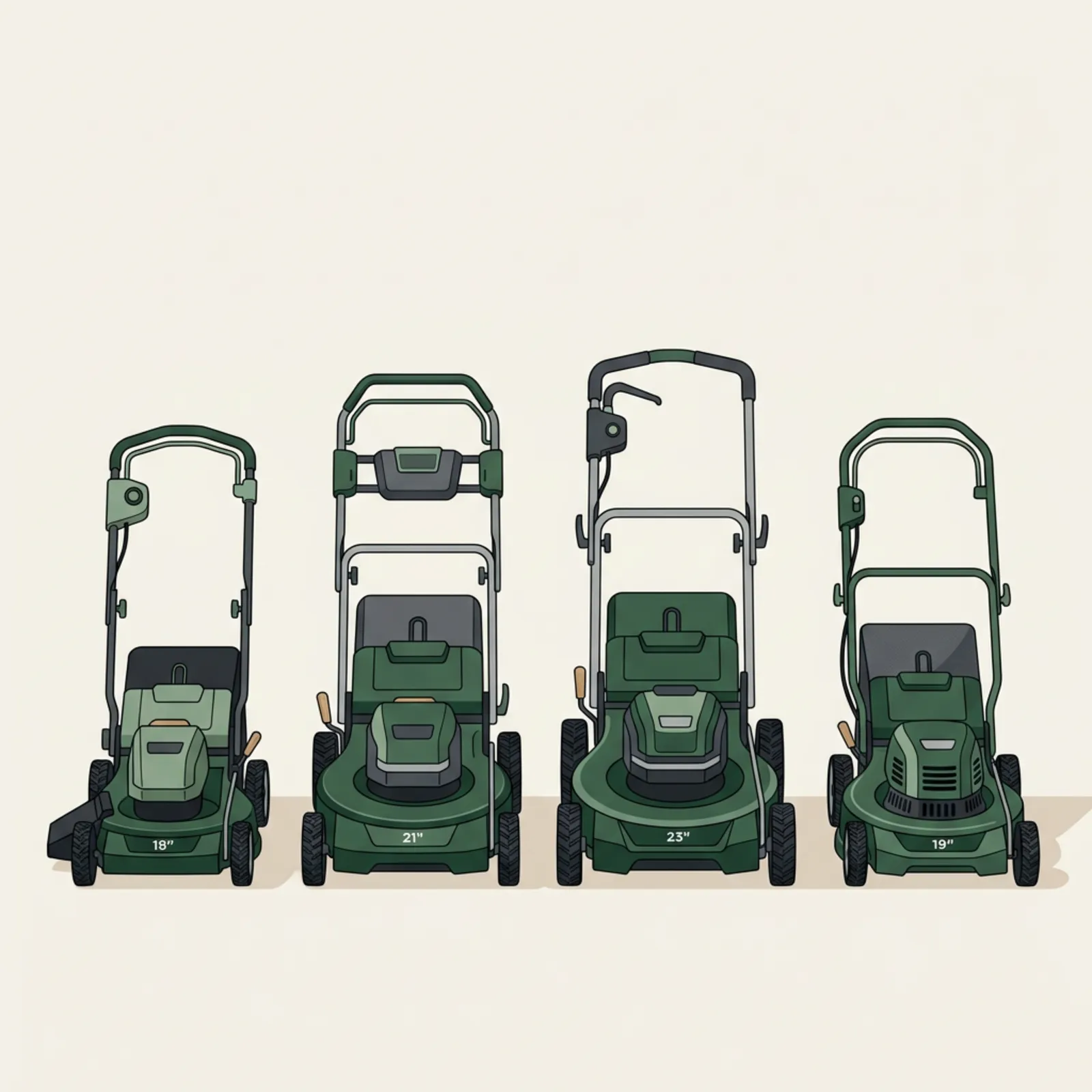
Best Battery Mowers for Thick Grass (2026)
Thick grass changes what a cordless mower has to do. The blade has to move more material, the deck has to keep that material flowing, and the battery has to support a slower pass. A mower that is perfectly capable on a weekly, dry lawn can bog down when it is asked to turn two weeks of lush spring growth into a short finish in one go.
That does not mean battery mowers are unsuitable for dense turf. It means the buying decision needs more than a headline runtime. This guide uses manufacturer-published torque and battery specifications as useful signals, then puts them in the right order: cut less at once, choose a mower with battery reserve, and use torque as headroom rather than a guarantee.
Thick grass is a cutting-volume problem
The phrase “thick grass” can describe dense turf that is still cut weekly, grass that grew several inches after rain, or an actually overgrown lawn. Those are different jobs. Dense but maintained grass asks for more blade power. Long grass asks the deck to process far more clippings. Wet growth adds clumping and poor airflow. No single specification solves all three.
Use this condition-to-plan table before deciding that a mower needs replacing.
| Lawn condition | First move | What the mower needs | Do not expect |
|---|---|---|---|
| Dense lawn, kept on schedule | Use a sharp blade and normal height | Cutting headroom and enough energy for your full route | Published maximum runtime in every condition |
| Lawn is taller than usual after one missed cut | Raise the deck and take a higher first pass | Battery reserve for a second pass | A clean, low finish in one pass |
| Grass is tall and damp | Wait for drying when possible; bag if mowing cannot wait | A bagging fallback and patient pace | Mulching to improve airflow |
| Lawn is truly overgrown | Reduce height in stages or use appropriate lawn-service equipment | A realistic recovery plan | Any residential cordless walk-behind to act like a brush cutter |
That is the page’s central decision asset. Buying more mower helps only after the mowing plan is sensible. If the grass is wet, start with battery mowers for wet grass; moisture changes the job before power does. If the lawn is dry but the clippings are heavy, the mulching guide explains when bagging is the cleaner fallback.
What the numbers can, and cannot, tell you
Published torque is a headroom signal. EGO lists up to 8.3 ft-lb of cutting torque for the LM2156SP and up to 7.0 ft-lb for the LM2135SP. Higher manufacturer-published torque can indicate more cutting reserve within that brand’s product line. It is not a standardized, cross-brand score, and it cannot tell you how a mower will behave in every grass species, height, or moisture level.
Watt-hours tell you how much work is stored. A 56V 10.0Ah pack is 560 Wh by nominal voltage-times-amp-hours math. A 56V 7.5Ah pack is 420 Wh. The difference is 140 Wh of planning reserve for slower travel, a higher first pass, or the missed strips that dense grass creates. It does not mean the larger pack delivers a fixed extra number of minutes. Temperature, blade condition, self-propel use, grass volume, and terrain all change actual runtime. See voltage versus amp-hours for the calculation and our runtime guide for the assumptions.
Deck height is the control you use first. The EGO models below have adjustable cutting heights, but the key is not the number of positions. The one-third rule is the useful guardrail: avoid removing more than roughly one-third of the grass blade in a single cut. A higher first pass reduces the volume entering the deck, then a later pass can bring the lawn to its normal height. This protects the turf and asks less of the battery at the same time.
The picks
The LM2156SP earns this spot on verified specifications, not a claim that we tested it against every dense turf type. Its 8.3 ft-lb published torque is the strongest figure in this guide, and its 10.0Ah kit creates the biggest energy reserve. The Select Cut XP system also provides interchangeable lower blades, including mulching, high-lift bagging, and extended-runtime options. For thick grass, that flexibility matters because the correct mode changes with the cut: mulch small, dry weekly clippings; bag or make a higher pass when the volume is too great.
The trade-off is that a premium mower is not a shortcut around height management. If you let the lawn become long, start high even with this model. The relevant comparison is not “can it cut thick grass?” but “can it make the first conservative pass and leave enough charge for the second?” For a half-acre sizing decision, check can a battery mower handle a half acre?.
The LM2135SP is not a lesser kind of thick-grass mower. It has the same core strategy: 21-inch deck, self-propelled pace control, three mowing modes, and a multi-blade system. It is the better fit when dense growth is normal but the lawn is not large enough to justify the larger battery as a recurring need. Its published runtime is up to 60 minutes with the recommended 7.5Ah battery; treat that as a manufacturer maximum, not the planning number for tall grass.
Its dedicated cut-quality options also make it a logical route for buyers choosing between this page and the best cordless mowers for mulching. Read the full LM2135SP research review for warranty, platform, and ownership context.
View this mower on AmazonHow to recover a lawn without draining the whole battery
- Wait for the grass to dry if you can. Wet clippings stick together and fill the deck. More power does not reverse that physics.
- Set the deck high for the first pass. Follow the one-third rule. The aim is to reduce volume, not to get the final height immediately.
- Slow down before the mower struggles. Self-propelled drive is useful here because a controlled, slower walking pace gives the blade time to clear the deck. It also uses battery energy, so avoid running it faster than the grass allows.
- Choose the discharge plan from the result. Fine, dry clippings can be mulched. If clumps appear, bag or stop and let the grass dry; repeatedly recirculating a heavy load is not a better cut.
- Make the finishing cut later. Let the lawn recover, then lower the deck to the normal setting. A second pass is not a failure. It is the technique that makes a cordless mower a good long-term maintenance tool.
This process is often cheaper than shopping for the largest mower after a single bad cut. If you have a normal weekly lawn and need the broadest recommendation, use the overall cordless mower shortlist. If dense growth occurs because the yard is simply large, work from the Best Mowers hub and its yard-size guides instead of buying solely on torque.
Why a robot mower can prevent the thick-grass problem
A wire-free robot mower is not a substitute for a walk-behind in every yard, but it changes the growth pattern. By cutting small amounts frequently, it avoids the large volume of clippings that makes a missed weekly cut difficult. That is a prevention case, not a claim that a robot can rescue an overgrown lawn. Initial setup, boundaries, slopes, obstacles, and acreage still decide whether the category fits. The robot mower hub covers those trade-offs.
For homeowners who consistently miss mowing windows during spring, that may be more useful than moving from one headline torque figure to another. For homeowners who enjoy mowing and just need an occasional recovery pass, a larger battery reserve and a staged-cut plan are the direct answer.
The bottom line
Choose the EGO LM2156SP when thick, fast-growing grass is a recurring condition and you need the largest verified battery reserve and highest published torque in this guide. Choose the EGO LM2135SP when your lawn is maintained weekly and you want the same basic cut-system strategy with less reserve and a lower price class. Choose neither as a way to scalp long, wet, or neglected grass in one pass. The decisive upgrade is usually a high first pass followed by a finish cut, with enough watt-hours left to do it calmly.
Buy this if…
Thick, dry spring growth is routine and you will mow on a schedule.**You will use a higher first pass and want extra battery reserve for a later finish cut.**You value a verified multi-blade deck with bagging and mulching options.
Skip this if…
You mainly mow wet grass or expect one pass to fix an overgrown lawn.**Your real problem is lawn size rather than dense growth; choose by the yard-size battery budget first.
Consider instead if…
Moisture is the recurring challenge: see battery mowers for wet grass.**Mulching quality is your priority on a maintained lawn: see best cordless mowers for mulching.
Thick-grass battery mower FAQ
Can a battery mower cut thick grass?
Yes, a suitable cordless mower can maintain dense grass, especially when you cut it regularly. The limiting factors are the amount removed at once, moisture, blade condition, deck airflow, and battery reserve. Raise the deck and make staged cuts when growth is long rather than forcing one low pass.
How much torque do I need for thick grass?
There is no cross-brand torque threshold because manufacturers do not publish the figure under one standardized mower test. Use published torque as a comparison signal within a brand, then give equal weight to battery watt-hours, mowing height, and whether the mower can bag or make a second pass. EGO lists 8.3 ft-lb for the LM2156SP and 7.0 ft-lb for the LM2135SP.
Should I mulch or bag thick grass?
Mulch small, dry weekly clippings. When the lawn is long enough to leave clumps, bagging or a higher first pass is the more reliable choice. A mower’s mulching mode is not evidence that it should process every volume of grass in one pass.
Why does my cordless mower bog down in thick grass?
The blade and deck are processing more material than in a routine cut. Tall or wet clippings can restrict airflow, and the motor draws more energy under load. Drying the lawn, raising the deck, slowing down, cleaning the underside with the battery removed, and using a sharp approved blade are better first fixes than immediately replacing the mower.
What is the one-third rule for mowing?
It means avoiding the removal of more than about one-third of the grass blade’s height in a single cut. For a lawn that has grown long, take a higher first pass and return later for the normal height. It reduces stress on the grass and the amount a mower must process at once.